


Introduction
Across the United States, outdoor recreation has surged with 4.1% growth from 2023 to 2024 leading to 57.3% of Americans participating in outdoor recreation activities like hiking, biking, fishing, running, and camping.1 The state of Vermont is no exception to this trend; in 2023, 15.8 million people visited Vermont, compared with just 10.7 million during the first year of the COVID-19 pandemic in 2020.2 From mountain biking on the Kingdom Trails to hiking the Long Trail or skiing the state’s backcountry slopes, more people are heading into the Vermont wilderness than ever before. Advances in outdoor gear and easily accessible trail information have made it possible for people of widely varying skill and experience levels to get outside quickly. However, with this increased activity comes an increased frequency of life-threatening emergencies; from 2015 to 2023, search and rescue incidents in Vermont increased 41% from 100 to 141.3 Similarly, the Vermont Urban Search and Rescue Task Force has gone from responding to 10 calls per year in the mid-2010s to almost 24 calls in 2024, including rescues of 265 people during two years of floods.4 In these critical moments, a rapid and coordinated emergency response can mean the difference between rescue and tragedy.
Civilian Search and Rescue
Vermont's civilian search and rescue (SAR) teams have proven themselves to be a solution to the increasing need for rescues. Local organizations such as Stowe Mountain Rescue5 and Richmond Backcountry Rescue6 are volunteer-driven units composed of some of the most skilled, experienced, and committed rescue personnel in the region. Their deep familiarity with local terrain, combined with year-round training, makes them the cornerstone of backcountry safety across the Green Mountains. They often work alongside other teams, like the State Police Search & Rescue Team7 or the aforementioned Vermont Urban Search and Rescue Task Force.4
Vermont’s mountainous terrain, while not towering by Western standards, still presents significant challenges. Dense forests, steep slopes, and rapidly changing weather conditions can turn even a short distance into a full-day trek for SAR ground crews, especially when carrying medical equipment and extraction gear. Injured individuals in such conditions face life-threatening dangers like hypothermia, internal bleeding, or worsening trauma. Approximately 1,200 people visit the ED every week due to injuries in Vermont, and 95% of calls for winter sports require EMS transport to the hospital.8 When time is critical, air support may be the only option.
Sometimes, these situations can be remedied by civilian helicopter Emergency Medical Services (EMS) agencies, which are an excellent resource for quickly getting a patient to the hospital. Unfortunately, in Vermont, these services cannot search for a patient, have limited capability to land in austere locations, especially at night, and cannot hoist a patient from the forest.
Military Augmentation
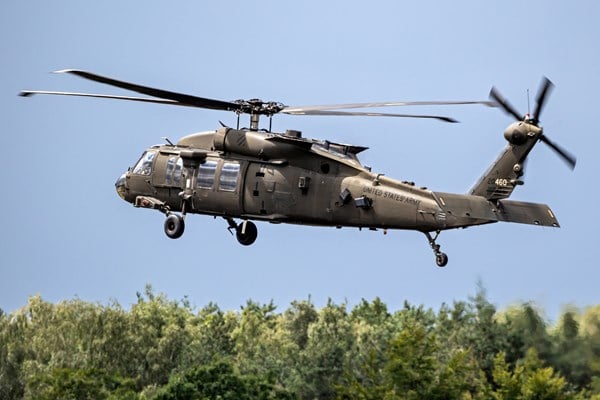
In these rare but life-threatening scenarios, the Vermont Army National Guard's rescue unit, Charlie Company, 3-126, plays a vital role. Their crews are highly trained in both precision aviation and emergency medical response. They operate HH-60M Black Hawk helicopters, which are flying ambulances equipped with infrared sensors to locate missing individuals, and hoist systems to extract people without landing. Additionally, crews are trained to operate with night vision goggles, allowing them to fly in darkness or low visibility.9 These are highly specialized capabilities that civilian EMS helicopters simply cannot offer.
While both civilian SAR teams and National Guard aviation units are highly capable on their own, it is their coordination that ultimately saves lives. That level of teamwork, however, doesn’t happen by chance. It requires regular training, strong communication, and a structured system to ensure smooth cooperation—all of which demand ongoing effort and familiarity.
Although Vermont has a formal process that allows SAR agencies to request helicopter support from the Vermont Army National Guard, effective use of that system depends on the agencies knowing how to activate it and understanding what support the Guard can realistically provide. Examples of this include collaborations between the Vermont Army National Guard and the Urban Search and Rescue Team for SAR after flood disasters in July 202310 and July 2024.11 Recently, however, deployments and staff turnover on both sides have led to a loss of the necessary working familiarity, diminishing the effectiveness of what should be a seamless partnership.
To address this, members of two northern Vermont rescue agencies recently participated in a remote informational meeting with the National Guard.12 The meeting covered the Guard's capabilities, activation procedures, response times, and the various factors that determine whether a helicopter can be launched. It was a critical first step in rebuilding operational trust and understanding.
Future Work
Looking ahead, the agencies plan to meet in person with Vermont Army National Guard personnel, tour the helicopters, and examine rescue equipment firsthand. The goal is to develop a mutual understanding of how these assets can best be used. Plans are also underway for a training exercise in which the Guard will land in a local field and conduct practice hoist operations. Civilian rescuers will get to experience what it's like to work in proximity to a live helicopter—something that can be intense and disorienting without proper exposure. This training is intended to pave the way for a future mountain-based scenario involving a simulated patient in need of aerial extraction. Importantly, this collaboration uniquely meets the needs of Vermont, but it may also represent a model for other states to follow as they consider how to save injured outdoor adventurers and those trapped by natural disasters.
Conclusion
As more people head into Vermont's backcountry, the state must be prepared for increasingly complex rescues in remote and challenging environments. The combination of ground-based civilian expertise and advanced military air support creates a powerful, life-saving alliance, but only if these teams are prepared to work together. Building relationships, refreshing training, and strengthening communication between civilian SAR and the Vermont Army National Guard isn’t just a good idea; it is a vital investment in public safety that should be emulated in states nationwide.
NOTE: The views expressed are those of the authors alone and do not represent the views or polices of the U.S. military, the National Guard, or any other agency of the U.S. Government.
References
- Denny C. Outdoor Recreation Hits Record Levels for Ninth Consecutive Year. Outdoor Industry Association. June 18th, 2024.
- Tourism Economics. Economic Impact of Visitors in Vermont 2023. December 2024.
- Katz L. Vermont search and rescues are rising—and first responders fear more people head out unprepared. Vermont Public. May 23, 2024.
- Flanders C. Vermont’s search and rescue team prepares for the future. Seven Days. May 21, 2025.
- Stowe Vermont website. Mountain Rescue. 2025.
- Richmond Rescue. Richmond Backcountry Rescue. 2025.
- Vermont State Police. Search and Rescue. 2025.
- Vermont Department of Health. Injury and Violence in Vermont. July 2018.
- Rivard N. Just behind the tree line. Department of Defense. DVIDSHub. June 4, 2014.
- Nunez D. Vermont Flood: Search and Rescue. Department of Defense. DVIDSHub. July 16, 2023.
- Pendl B. VTARNG Soldiers support Urban Search and Rescue Teams. Department of Defense. DVIDSHub. July 10, 2024.
- McGuire T. Vermont Army National Guard Aviation Assets and Activation Discussion, March 26, 2025 Personal Correspondence.