



Sexual assault, intimate partner violence, domestic violence, human trafficking, and other forms of interpersonal trauma are highly prevalent public health concerns. Emergency departments (EDs) often serve as the first point of contact for survivors, placing emergency medicine (EM) providers in a critical position to recognize and respond to these needs.
Despite the increasing number of ED visits by victims of violence, trauma-informed care (TIC) and clinical forensic principles are not mandatory components of the EM residency curricula and are therefore not consistently emphasized during training.1 The area of clinical forensic medicine itself has only recently gained formal recognition by the EM community; ACEP established the clinical forensic medicine membership section in 2006.2
This educational gap may contribute to missed opportunities for early recognition, increased legal and ethical challenges, and inequities in patient care. Strengthening education in this area can help ensure that survivors receive care that is both compassionate and comprehensive. Prior research demonstrates that structured TIC training and education can enhance provider confidence, documentation accuracy, and patient outcomes.3 An additional study has shown improved communication and examination skills among medical students following TIC education.4 Addressing this gap through targeted educational and clinical initiatives may improve resident preparedness, enhance patient safety, and promote more equitable outcomes for survivors presenting to the ED.
In this article, we interviewed Dr. Rozzi, a faculty member and Medical Director of the Forensic Examiner Team at WellSpan York Emergency Medicine, as well as a member of the ACEP Forensic Medicine Section, to gain her insights on the fundamentals of forensic medicine and trauma-informed care for emergency medicine residents and medical students.
Introduction to Forensic Medicine in EM
- For those of us still in training, how would you define forensic medicine and its relevance to everyday emergency department practice?
Clinical forensic medicine focuses on the assessment, treatment, and documentation of injuries in living individuals, particularly those involved in crimes like assaults, sexual assaults, or abuse cases. We provide care in a trauma-informed manner, helping our patients start on the path from “victim” to “survivor.” Forensic physicians conduct examinations, provide medical care, collect evidence, document findings, and provide expert medical and legal opinions.
- What kinds of cases are EM residents and students most likely to encounter that involve forensic considerations (e.g., sexual assault, domestic violence, child or elder abuse)?
We take care of these patients every day in the ED. Cases of sexual assault, intimate partner violence, child abuse, elder mistreatment, and human trafficking are more common than most realize. In addition, patients who have been the victims of assault, stabbings, gun violence, and auto accidents may benefit from forensic expertise.
- Why do you think forensic medicine isn’t often emphasized in EM training, and why should it be?
Most EM residency programs do not have faculty who are experts in clinical forensic medicine, so this training is often overlooked, but EM physicians are uniquely positioned to care for victims of violence. We often have the only chance to collect evidence before it is destroyed.
Trauma-Informed Care
- What are the most important trauma-informed care principles that residents and students should apply when evaluating patients who may also be forensic cases?
Many of our patients come to us with either acute trauma (gunshot wounds, assaults, motor vehicle accidents) or as an indirect result of trauma (substance abuse, anxiety/depression, suicidal thoughts). We may not recognize that our patients have experienced trauma, so we should treat every patient in a trauma-informed manner. It is key to give our patients choices whenever possible, to involve them in decision making, to explain procedures and interventions clearly, and to obtain informed consent.
- What are some common mistakes learners make when interviewing or examining patients who may be victims of violence, and how can we avoid them?
We often don’t ask about abuse because we don’t know what to do with a positive response. ED physicians need to know what resources are available in their communities. Clinicians need to avoid victim blaming. Questions such as “Why do you stay?” imply that continued abuse is the patient’s fault. We need to empower our patients; they are the experts on their own safety. And we need to take care of ourselves. Vicarious trauma is real, and it can lead to burnout.
- Can you share an example where a trauma-informed approach changed the patient’s ED experience or the forensic outcome?
A few months ago, one of the residents in my program took care of a teenager with suicidal thoughts. The resident was kind and compassionate. She offered the patient choices for types of snacks, comfort in the ED room (extra blankets), and the order in which the physical exam would be performed. The resident asked permission for each step of the exam. Toward the end of the encounter, the patient burst into tears and told the resident about having been a victim of sexual abuse. The patient had never disclosed this to anyone, but the resident had earned her trust.
Social Emergency Medicine (Social EM) Connections
- Many forensic cases overlap with vulnerable populations. How can EM residents and students better recognize the social factors (housing, safety, socioeconomic stressors) that may impact these patients?
First, it is important to realize that child abuse, intimate partner violence, and elder mistreatment cross all socioeconomic lines, and often the most privileged victims have the most difficult time disclosing. Many patients who have been victims of abuse do not feel that they can leave the situation as they lack necessary resources. It is important to ask what resources the patient needs and to know what resources are available in the community for victims of violence. For example, the domestic violence advocacy organization in my area can provide safety planning, housing, legal representation, and counseling to patients in the emergency department. The local SPCA can provide housing for pets belonging to victims of intimate partner violence.
- What advice do you have for trainees on balancing the need to gather medical and forensic information while also addressing social needs?
Addressing social needs should be part of discharge planning for every patient. We should be working with our patients who are victims of violence to develop a safety plan prior to discharge. We should also provide them with community resources as needed.
- How can we avoid bias or assumptions when evaluating patients who present with possible forensic concerns?
We need to recognize that violence can affect patients of all socioeconomic backgrounds, levels of education, gender, and sexual orientation. We should be nonjudgmental when caring for all our patients, but particularly victims of trauma.
Education and Skill-Building
- What basic forensic skills should every EM resident or medical student know (e.g., documentation, evidence preservation, photography, chain of custody)?
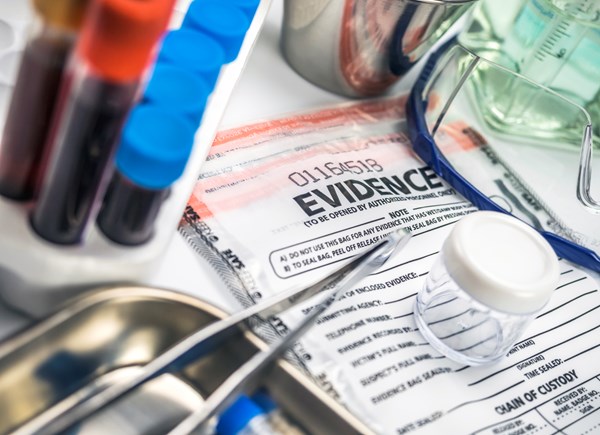
Every EM physician should know how to accurately describe injuries by type, pattern, size, and location. We often have the only chance to collect and preserve evidence, so it is key to know how to collect evidence, how it should be documented, and how and where it should be stored. Photodocumentation can be important for patients with visible injuries and we need to know how to take clear photos with and without scales for size. A chain of custody needs to be documented for all evidence collected. Most hospitals have a chain of custody form.
- Are there practical things we can start doing now during routine patient encounters that will improve our forensic awareness and skills?
We should screen all women for intimate partner violence per ACEP recommendations. We should be documenting injuries the same way for patients with accidental injuries as we would for patients with forensically relevant injuries. Most importantly, we should practice trauma-informed care for every patient.
- How can residents and students seek out opportunities or mentors in forensic medicine if their programs don’t have a formal curriculum?
Join ACEP’s Forensic Section! This is a group of ED physicians who are interested in clinical forensic medicine and love to teach and mentor students and residents.
Systems, Advocacy, and Collaboration
- How should residents and students think about collaborating with law enforcement, social workers, and community resources while keeping patient trust at the center?
Emergency medicine is a team sport, and clinical forensic medicine is no different. However, everything we do, including notification of law enforcement, must be with the patient’s consent unless federal, state, or local laws say otherwise. If I see a patient for whom I am a mandated reporter, I let them know that I am required to report.
- What barriers do you think trainees will encounter in practicing forensic medicine, and how can we help overcome them?
The biggest barrier is the lack of awareness of the prevalence of violence and trauma in the lives of our patients and, therefore, not recognizing that forensic services are needed. Careful history taking using a trauma-informed approach is key. Many physicians also do not know what resources are available in their communities. We should become acquainted with these resources. I find that it helps to introduce myself to local domestic violence and child abuse advocates before my patients need their services.
Looking Ahead
- How do you see forensic medicine evolving within emergency medicine, and what role will residents and students play in that change?
As forensic science evolves, our evidence collection techniques will also evolve, and it will be important to stay abreast of these changes. In my opinion, the most important thing we can do as emergency physicians is to ask all our patients about violence in a way that makes them feel safe to disclose.
- If you could leave EM trainees with one key takeaway about forensic medicine, what would it be?
Sometimes, our patients are a crime scene. We need to know how to perform a trauma-informed history and exam, and we need to know how to collect and preserve evidence because we may have the only chance.
References
- Sande MK, Broderick KB, Moreira ME, Bender B, Hopkins E, & Buchanan JA. Sexual assault training in emergency medicine residencies: a survey of program directors. West J Emerg Med. 2013;14(5), 461–466.
- Society for Academic Emergency Medicine. History of clinical forensics. 2024. Accessed Dec. 8, 2025.
- Brown T, Ashworth H, Bass M, Rittenberg E, Levy-Carrick N, Grossman S, Lewis-O'Connor A, & Stoklosa H. Trauma-informed Care Interventions in Emergency Medicine: A Systematic Review. West J Emerg Med. 2022;23(3), 334–344.
- Lee CH, Santos CD, Brown T, Ashworth H, & Lewis JJ. Trauma-Informed Care for Acute Care Settings: A Novel Simulation Training for Medical Students. MedEdPORTAL: the journal of teaching and learning resources. 2023 July 28;19, 11327.