



Browsing: Topics

48-6 SAPB.png
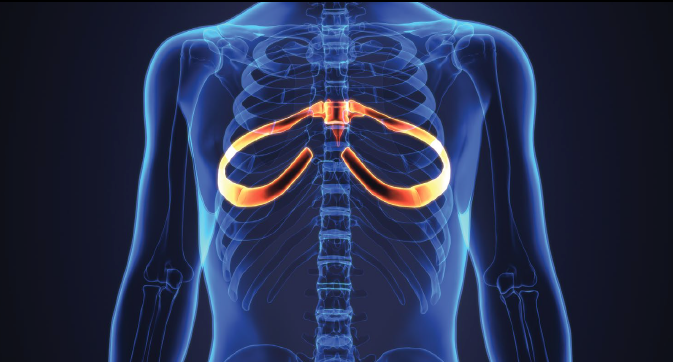
Elderly patients with chest wall injuries have a mortality rate up to 13% - attributed in part to the effects of pain. EAST guidelines offer a range of analgesic options, but ultrasound-guided serratu
48-6 FSGS.png
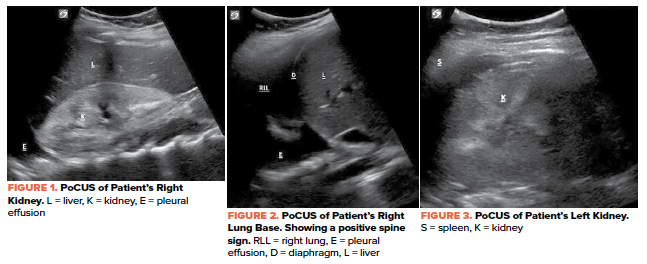
Point of care ultrasound can be used to help evaluate patients with suspected kidney pathology and to diagnose causes of renal colic, renal failure, hematuria, and decreased urine output. Compared to
48-6 PENG block.png
Hip fractures are common injuries evaluated in the ED. The majority of patients who suffer a hip fracture are over 80 years old, and as the population ages, the incidence of hip fractures is expected
48-6 Acetaminophen Toxicity.png
Acetaminophen toxicity is one of the most common causes of liver toxicity in the United States. New data reveals that fomepizole may be hepatoprotective in high dose acetaminophen toxicity when review
Board Spotlight - Jessica Adkins Murphy.png
EMRA Secretary of the Board/EM Resident Editor-in-Chief Jessica Adkins Murphy is ready to elevate the voice of emergency medicine through print and digital outreach.
Board Spotlight - Amanda Irish.png
EMRA Vice Speaker of the Council Amanda Irish wants you to know policy can be a powerful way to shape the profession you want.
Board Spotlight - Abbey Smiley.png
EMRA President-elect Abbey Smiley, MD, is ready to tackle the challenges that lie ahead with the healthcare workforce in America.
48-6 Patient Pronouns.png
There has never been a more critical time for the healthcare community to stand up for our trans and nonbinary patients. Using a person's chosen name and pronouns isn't difficult. It isn't radical. It
48-6 Switch into EM.jpg
After a second interview season, I’m an intern in emergency medicine watching as EM-bound students and reapplying residents make their way through the match. This is what I learned about taking the sc
48-6 Health Equity Panel.png
Emergency physicians treat everyone, regardless of social position, race, ethnicity, gender, religion, sexual identity, or abilities. However, are we treating everyone equally?